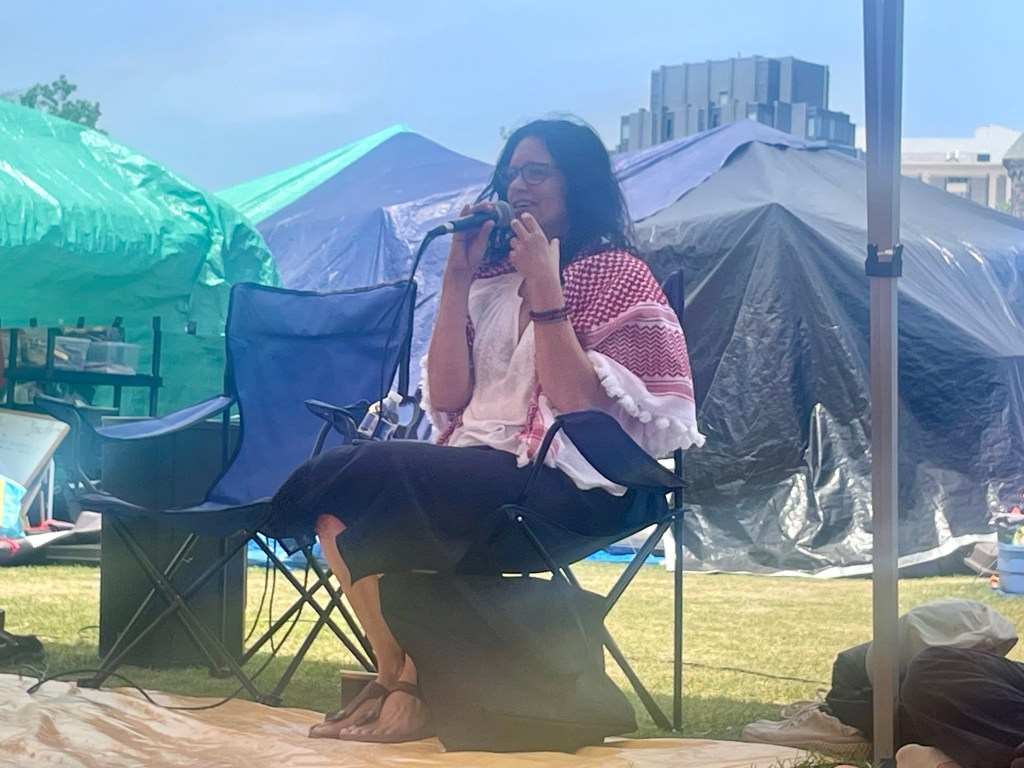
by Leanne Betasamosake Simpson
Although our ancestors lived through the genocide of Indigenous peoples in North America, this past year we have witnessed a genocide in real-time, with technologically advanced warfare, destruction and obliteration on a spectacular scale. We’ve watched daily video footage and photos of unimaginable violence targeting families and children. We’ve read social media posts, news reports and poetry coming from Palestinians inside Gaza. And we’ve watched the very states that have dispossessed us of our homelands, supply the weapons and unwavering political support to Israel to do the same to the Palestinian people.
This past year, we’ve seen the depths settler colonialism will go to secure land and resources, alongside the death of any shared morality for life and living.
Witnessing Canada, the United States and Israel manufacture consent for colonialism and justifications for dispossession, ethnic cleansing, apartheid and genocide in Palestine has shown me there is no end to the lies they will tell to secure their narrative. The past year has been a living example of how the the public learns to justify colonialism and genocide and how despite evidence to the contrary, they find two sides to genocide.
We have (again) been shown that real danger of reconciliation isn’t that it is performative, but that its architecture obfuscates the on-going logics of colonialism in Canada so fully, that too many of us could not recognize Israeli settler colonialism and genocide when it was live streamed to our phones in real time.
This past year has reaffirmed the importance of teaching Palestine and writing about colonialism and anti-colonialism, in North America and the Global South. It has reaffirmed the importance of organizing across struggles and taking inspiration from the long tradition of Palestinian resistance because, as Fargo Tabakhi writes, “to write in solidarity with Palestine is to write amidst the long middle of revolution.” I’ve been reminded by Palestinians and my ancestors that defeating colonialism is a long struggle demanding a “steadfast perseverance.”
Following the outstanding example of Palestinians, I’ve learned how crucial it is to learn to speak, write and organize through and alongside grief, rage, and violence. From students and their constellated encampments I was reminded of the power of direct action and solidarity as a lived practice, and the importance of building otherwise to not only hold universities accountable for their enthusiastic support for Israeli settler colonialism but to generate the knowledge, skills and networks we need to build anti-colonial futures. To create refuge in the midst of repression, and to show Palestinians in Gaza that they have been seen and heard and we are acting. And from my Palestinian comrades, friends, fellow writers and academics, I’ve learned a tremendous love of land, culture, family and life, and it has transformed me. From all the people worldwide that spoke out, wrote, organized and stood up for Palestine, I’ve learned that even though millions of us have not yet been able to stop this genocide, we will continue to refuse colonialism and gencoide and work tirelessly to end the occupation, dismantle apartheid and free dear Palestine.
Chi’miigwech Palestine, for all of your teachings, your steadfast perseverance and for all of your revolutionary acts of love.
Leanne Betasamosake Simpson is a Michi Saagiig Nishnaabeg writer, academic and musician and member of Alderville First Nation.
 Indigenous Solidarity with Palestine
Leave a comment