By Leanne Betasamosake Simpson
June 3, 2024
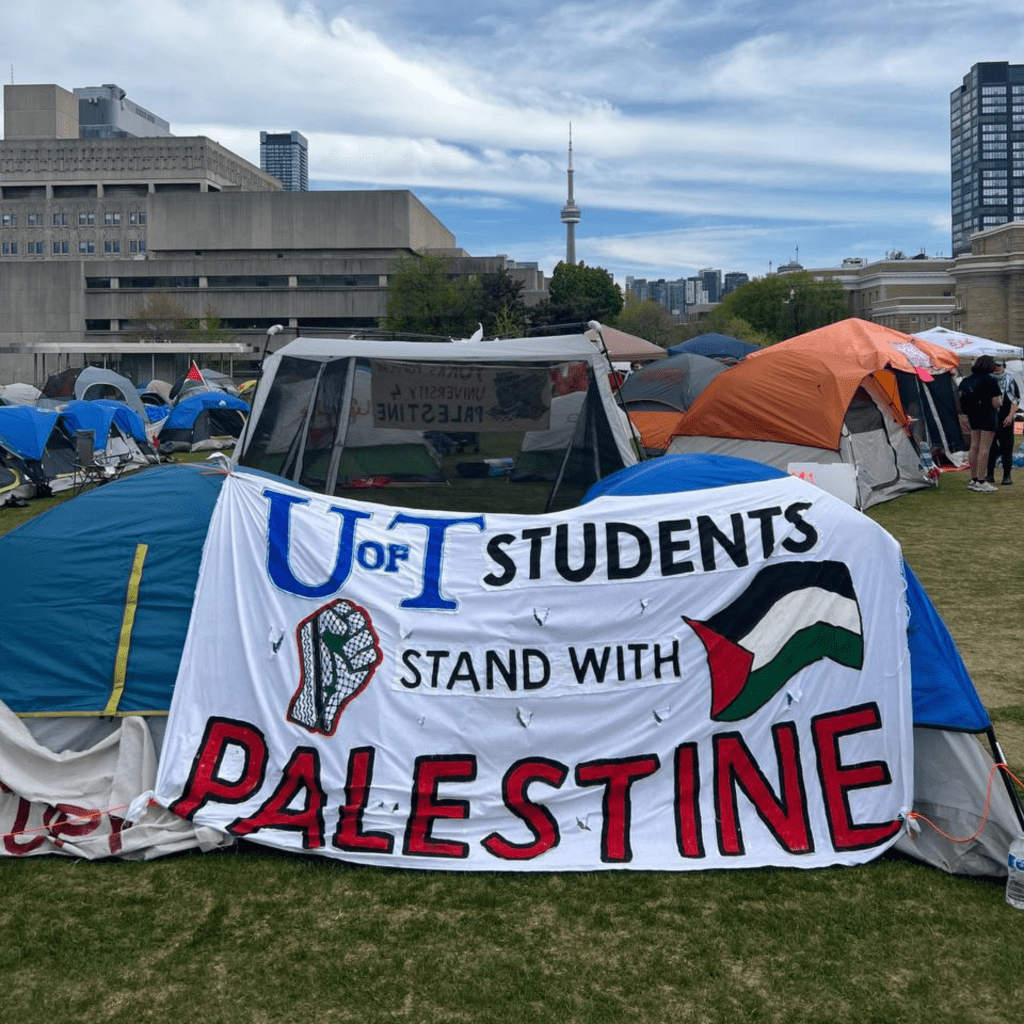
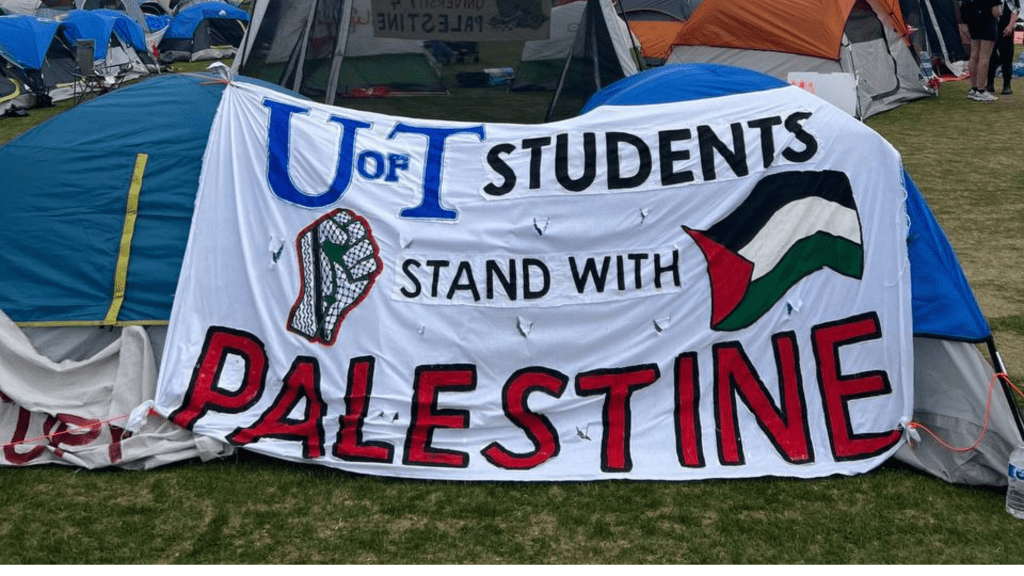
Nineteen days of the People’s Circle for Palestine occupying King’s College Circle at the University of Toronto had passed before I’d made it there. I felt guilty. I was recovering from a recent trauma and I was trying to prioritize my own mental health. I was attempting to take time off. It was odd to me then, that my therapist suggested I visit the encampment. She is Jewish and anti-Zionist and she shared with me that visiting the encampment community with her children on a regular basis had uplifted her. It was a calm and peaceful space, she said. The students had built a world, she told me, that she wanted to live in.
I texted with Robyn Maynard, a good friend and a faculty supporter of the encampment to help me arrange the visit. I let her know that Victoria Day would be the best time for me to visit, and she let me know that me doing a teach-in focusing on my own work on colonialism, Indigenous resistance and solidarity with Palestine would be useful to the students. Victoria Day worked for me because there would be very little traffic on the highways from Peterborough to Toronto and then back again. I figured since I would be traveling in the opposite direction of cottage country on the long weekend, the drive should be smooth. I was right. Home to encampment in less than 90 minutes which is rare.
Stepping into the People’s Circle for Palestine, I felt a wave of calm wash over me. It was quiet and welcoming. There were a bunch of children playing soccer, students drinking coffee and reading. I met Robyn and other faculty supporters, Deborah Cowen and Chandni Desai. A group of students gave me a tour, stopping first at an old Oak tree that was roped off in an act of care and preservation. I visited the Sacred Fire in the eastern doorway, tended by firekeepers, aunties and grandmothers from Anishinaabe homelands and offered tobacco for the Palestinians in Gaza, the West Bank, 48 and the diaspora, and for the close to 40,000 Gazans that were killed. While self proclaimed Anishinaabe Zionists Harry LaForme and Karen Restoule are using our “traditional values” and our “Seven Ancestor Teachings” to justify a genocide and to wash over our Michi Saagiig Nishnaabeg colonial past, these students were enacting something that would make my ancestors proud. I saw students acknowledging the violence of colonialism that has stripped my people of our homeland and using practices from all over the world to build a community where everyone was striving to live and work together in the very best practice of mino-bimaadiziwin, a continuous rebirth. A careful considered practice of living communally that at its foundation is based on relationality.
The evidence for this was everywhere in the People’s Circle for Palestine and in particular, in the encampments community programming and care team. Each day, there is programming that centers the experiences of Gazans and Palestinians while making the links to other movements and communities. Shabbat Rituals on Friday. Jummah Prayers. Teach-ins on Kashmir; Black Lives, Memory and Genocides, and Queer and Trans Solidarity. Yoga, art therapy and mindfulness sessions. Film screenings. Creative writing. Peer support and regular sessions with counselors onsite. Graduation ceremonies for students in Gaza who are unable to graduate because the physical buildings of their universities have been destroyed. Vigils for those murdered in the recent bombing of the tent community in Rafah.
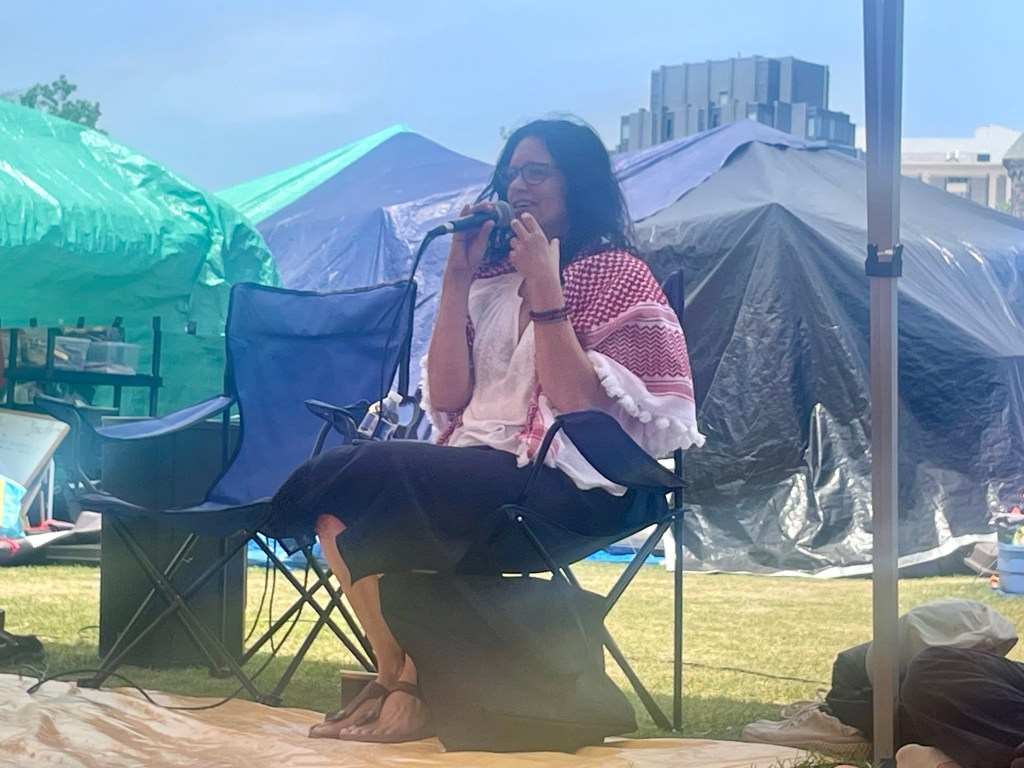
I was offered water, coffee, sunscreen, snacks, and a place to sit and shade while I was there. Students were continually checking in and asking me if I needed anything and they had a tent full of supplies. They were so kind, generous and incredibly organized. During my teach-in, I sang for Gaza and I sang for the students. I talked about why Indigenous solidarity with Palestine is vital. I answered academic questions about my work, questions about my artistic practice and life, and then I sang some more.
I came away recognizing that these students are embodying everything I’d ever taught in my classes, everything I’d written about in my books about resistance and generative refusal. My therapist was right. They had built the alternative, and while nothing is ever perfect, the People’s Circle for Palestine is glorious and a phenomenal achievement.
I know this work is not easy. I know that behind all the good I experienced is a result of a tremendous amount of individual emotional and physical labour. I know this means hours spent in meetings, moderating conflicts, making ethical collective decisions, all while working under the threat of police violence, and punishment from the University of Toronto. And these students are here anyway, studying, organizing and demanding that their place of learning, a public institution which cannot exist without their tuition, their thesis and their dissertations, discloses, divests and cut ties.
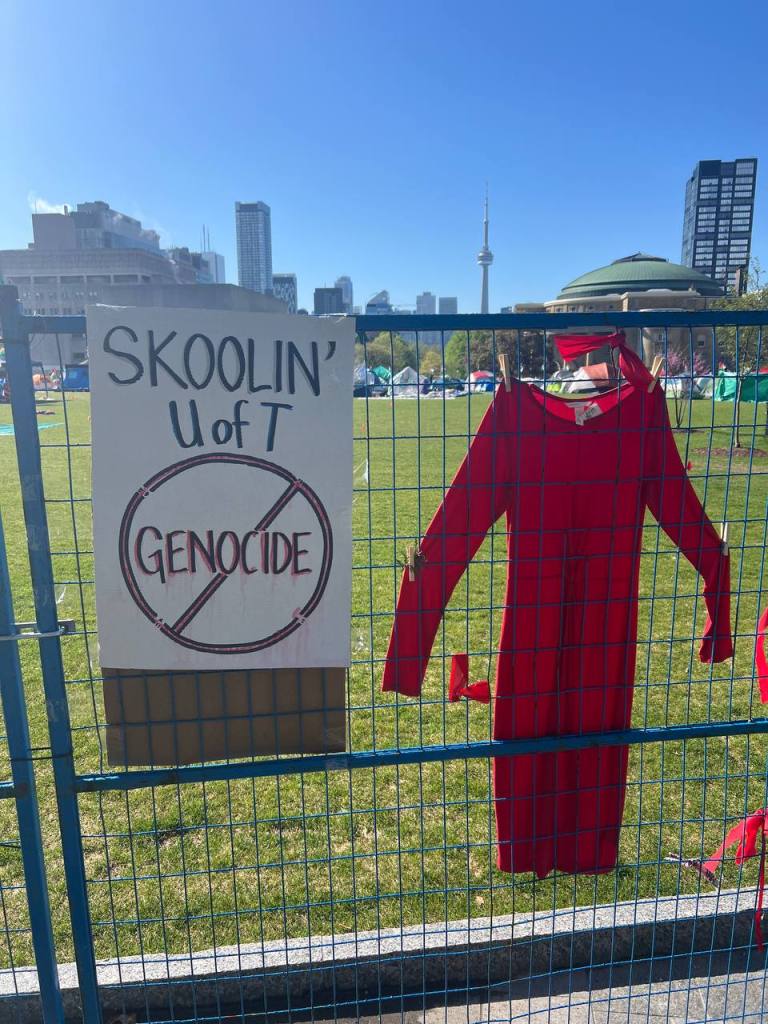
This is the very least academic institutions should do in the wake of Israeli scholasticide and the catastrophic violence of Israeli genocide, and Gazan academic’s open letter calling for academics and administrators to physically assist in rebuilding their universities.
I came home from the encampment in better shape than when I had left. I came home grateful to Palestinians for educating me again, to all the students at the encampment along with the faculty, staff and unions supporting them. I came home from the encampment astounded by the theory and knowledge being collective generated at this site. The encampment community was everything I’d ever dreamed a university could be. Engaged students studying, dreaming and making otherwise, with care and thoughtfulness as their foundation, supported by their professors.
Students shouldn’t have to lead our solidarity with Palestine. But they have stepped up, showed us how it’s done and they’ve had a clear impact. They’ve shifted the conversation in Canada. As they continue to face the threat of police violence, and as the horrific genocide continues to destroy the lives of Palestinian families, it is long past time for the rest of us to stand up and demand a free Palestine.
Leanne Betasamosake Simpson is a Michi Saagiig Nishnaabe writer, musician and academic.
 Indigenous Solidarity with Palestine
Leave a comment